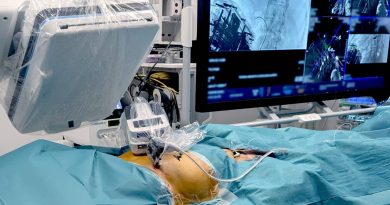
Distalmotion Closes $150M Series G Financing to Advance US Rollout of DEXTER Robotic Surgery System

Lausanne-based Distalmotion has closed a $150 million Series G funding round led by Revival Healthcare Capital, with continued support from existing investors, to drive its expansion in the United States, particularly in the fast-growing Ambulatory Surgery Center (ASC) market. Funds will also support ongoing clinical work and further development of the DEXTER robotic surgery platform.
CEO Greg Roche said the investment strengthens the company’s long-term strategy. He noted that the backing from both new and returning investors “validates our vision to break down barriers to robotic access through simplified operations.” Roche added that ASCs remain a central focus as Distalmotion advances its commercial rollout in the US.
Alongside the financing, Distalmotion appointed Chas McKhann as executive chairman of the board. McKhann has over 25 years of experience leading medtech and life sciences companies. His previous roles include CEO of Apollo Endosurgery and Silk Road Medical. The company described his background in scaling businesses and guiding commercial growth as an important addition at a time of accelerating market activity. “I am thrilled to join the Distalmotion team,” said McKhann, adding that DEXTER “delivers all the benefits of robotic surgery — dexterity, precision, and ergonomics — while also offering flexibility, efficiency, and value.”
According to Distalmotion, nearly 3,000 patients have been treated with DEXTER in Europe and the United States. The system has received FDA clearance for gynecological procedures and continues to gain traction in routine clinical use in the US. The company expects expanded investment and leadership support to extend access to robotic surgery in more outpatient settings.
DEXTER is a soft-tissue robotic surgery system designed to operate in a wide range of operating rooms without infrastructure changes. The platform includes single-use wristed instruments and supports workflows that allow surgeons to move between laparoscopic and robotic techniques as needed. It is indicated for general, urologic, and gynecologic laparoscopic procedures in Europe, and for inguinal hernia repair, cholecystectomy, and benign hysterectomy in adults in the United States.