Precision Neuroscience Demonstrates First High-Bandwidth Brain-Computer Interface Without Open Surgery

Precision Neuroscience has published results in Nature Biomedical Engineering showing that its high-bandwidth brain–computer interface (BCI) can be delivered without open-brain surgery. The study represents a milestone for the field, demonstrating that surface-based electrode arrays can achieve performance levels previously associated only with penetrating electrodes, while significantly reducing patient risk.
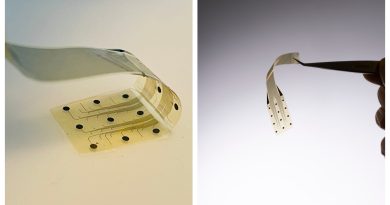
The research combined preclinical animal studies with first-in-human testing involving five patients undergoing standard neurosurgical procedures. Precision’s system uses a novel micro-slit technique to deploy ultra-thin cortical arrays that rest on the brain’s surface rather than piercing it. Each module is about the size of a postage stamp and contains 1,024 electrodes. Up to four modules were placed in individual patients, enabling recordings from more than 4,000 sites across 8 cm² of cortex. In both animal and human studies, the system delivered high-resolution neural recordings and supported motor and sensory decoding, as well as focal stimulation.
For decades, BCI research has been limited by the tradeoff between safety and performance. Traditionally, high-resolution decoding required penetrating electrodes, which increased the risk of tissue damage and limited long-term adoption. Precision’s findings challenge this paradigm by demonstrating that surface-based technology can capture neural detail at scale while maintaining a safer surgical profile.
The company’s leadership emphasized the implications for future clinical applications. Benjamin Rapoport, MD, PhD, the company’s co-founder and Chief Science Officer, noted that patients no longer need to choose between brain safety and performance. Craig Mermel, Ph.D., president and chief product officer, added that capturing detailed brain activity at scale is key to translating thought into action — from controlling a cursor to generating speech.
Since the publication, Precision has expanded its work beyond the five patients described in the paper. More than 50 patients have now received implants, and earlier this year, the company received FDA clearance for temporary implants lasting up to 30 days. Ongoing studies at six U.S. medical centers are testing the system’s ability to enable patients recovering from neurosurgery to control devices, type, or play games solely through thought.
The technology holds particular promise for people living with paralysis from conditions such as stroke, ALS, or spinal cord injury. By combining high-bandwidth signal capture with minimally invasive delivery, Precision Neuroscience is positioning its platform as a scalable path toward clinical-grade brain-computer interfaces.